
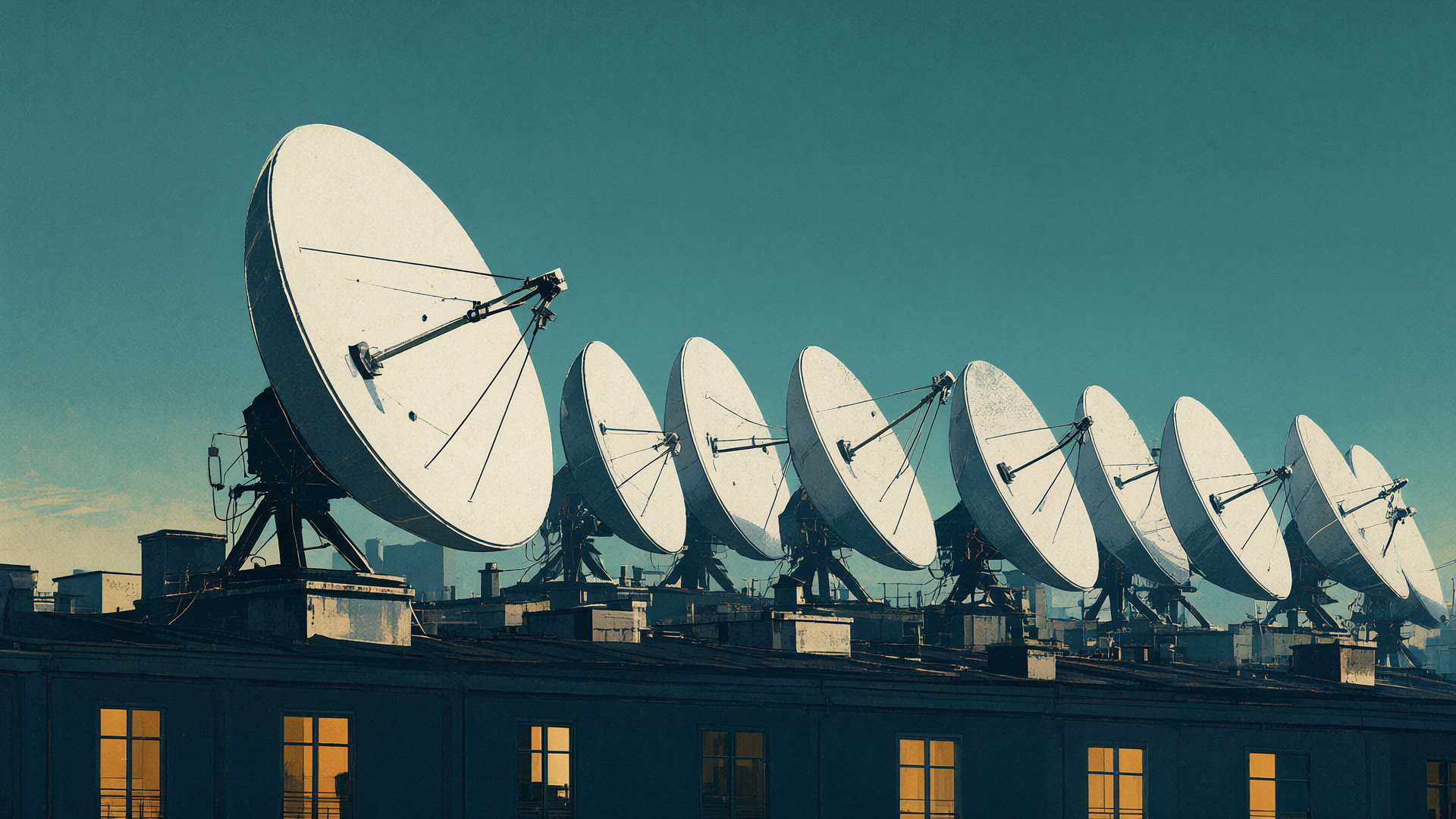
Steve Blank has spent the last month in London and says he has been listening to policymakers react to a wake up call delivered by Elon Musk. The short version: the United States shut off intelligence and throttled Starshield, the military variant of Starlink, for Ukraine. In the US that was a blip. In Europe it landed as proof of something people had been called paranoid for saying out loud.
What reportedly happened, and why the detail matters
Blank is careful about attribution, and so should anyone quoting this. According to the Wall Street Journal, via Blank, Musk personally ordered the restrictions, seemingly on a whim of a single individual. Blank's reading is that this was neither articulated US foreign policy nor an announced act of the US government, but the personal decision of an American CEO acting unilaterally.
For years, the idea that the US could hold a kill switch in weapon systems and critical commercial technology was dismissed in London and Brussels as doomsday thinking. Blank admits he thought so too. Then it happened, without warning, in the middle of a war, to a partner. Whatever the motive was, and his comment section argues about the motive at length, the capability to degrade a partner existed and was used.
I want to be precise here because this is exactly the sort of story that grows in the retelling. The part that is documented is the shutdown and the WSJ attribution. The part that is contested, loudly, in the comments under the piece, is why. That distinction does not weaken the lesson. It sharpens it. Nobody outside the decision needed to know the reason for Europe to notice the switch was real.
The question buyers are now asking out loud
Blank reports the conversations he heard: what happens if the other American CEOs decide to restrict, limit, or deny access to their products? He names Microsoft, OpenAI, Anthropic, Oracle, Palantir and Google. Then he asks the question underneath it. What capabilities would Europe lose if enterprise software and AI across the continent went dark?
Until this week that question was a joke in a conference room. It is not a joke now. The lesson European decision makers took was simple: no nation can outsource its sovereignty and its security by depending solely on US data systems and intelligence. That is not an anti-American sentiment. It is a procurement risk assessment, and it just got a very expensive data point.
AI changes the arithmetic of replacing a stack
This is where the piece gets interesting for anyone who runs infrastructure rather than policy. Europe has debated digital sovereignty for years, and the reason it stayed a debate was cost. Rebuilding the feature set and the compatibility layer of Microsoft Office, Oracle, Salesforce, Palantir or Anduril looked insurmountable. Some things still are. Low-cost access to space has not gotten easier.
Software has. Blank's argument is that AI collapses the cost of creating sovereign software at the exact moment geopolitical risk is making customers willing to switch. Recreating the features, functions and compatibility of those products is now within reach of most nations, not just the largest three.
I think he is right, and I would put it more sharply. The barrier was never the code. It was the accumulated compatibility surface, the twenty years of weird edge cases that make an alternative break in production. Models are genuinely good at exactly that kind of grinding compatibility work, and local inference means the replacement does not itself depend on a foreign API staying available. That combination is new. It is also the first time the sovereignty argument has an engineering answer instead of a moral one.
The bill lands on the American side too. Blank expects the allied market for that ecosystem to shrink, with tens if not hundreds of billions in lost revenue over the years ahead. And he names the new sales problem precisely: a US founder selling into European defence or government now needs an answer to "who holds the switch" before the first meeting. European founders, meanwhile, just discovered that sovereignty is a feature they can sell.
What this looks like from a homelab
The same logic runs smaller. The reason a Linux box, a Postgres database and a local model are defensible now is not ideology. It is that the cost of the alternative dropped far enough that the risk calculation flipped. You keep the data on hardware you control, you keep the model weights on a disk you can read, and you stop depending on a vendor's continued goodwill. That used to be a hobby. For a lot of companies it is now the cheaper option.
None of this happens quickly, and Blank's own framing is that the switch question will be asked in procurement meetings long before any migration finishes. Watch for it in contract language first. That is where sovereignty actually gets decided, and it is a lot less dramatic than a satellite going dark.